

It was a day long anticipated, ever since that sun drenched day in Vic West last July when Pacific FC was announced as one of the inaugural clubs to join the Canadian Premier League.
In unveiling the club’s intention to join the new league, Pacific FC also released its unique and eye catching colour scheme (officially titled Van-Isle purple and Blue Lagoon through a well written, corporate-speak press release) and introduced us to its sharp new emblem.
The release of the official kit however would have to wait. The kit has a special place amongst football fans. It is something that is immediately identifiable, one that we can touch, feel and proudly wear whether at a kick about or at the pub. It is the physical embodiment of our support for a club. Ever since the league was announced, speculation amongst kit nerds ran rampant over customary discussion points such as what the primary colour would be, would there be hoops or a sash, which manufacturer would provide them and who the shirt sponsor would be. Many fantasy iterations were dropped by the talented army of graphic designers that populate the nether regions of the Canadian Premier League online forums.
Then, finally (!) came the day of all days. Thursday, 4 April. The league and its kit supplier, the Italian company, Macron, held a league-wide simulcast to release the kits, to fervent fan fare in all seven CPL cities.
The sense of excitement was genuinely palpable at the Pacific FC’s club shop, which was impressively filled to the gills with supporters who purchased inaugural season memberships. Club owner Josh Simpson regaled the assembled mass about the design process, on how he traveled to Macron headquarters in Bologna over several days to design the kit, and on how he attempted to reflect the island’s colour palette and include elements that would allow his players to maximize style and comfort.
After a pep rally type address from the club’s Communication Director, Mira Laurence, the kits were finally unveiled. Simpson stood beaming like a proud father as players Marcus Haber and Issey Nakajima-Farran walked out onto a runway to model his shirts. The crowd at the shop gasped when the shirt was first shown on the screen, and continued its oooohhhs and aaahs once the kits were wheeled out in the shop for closer inspection.
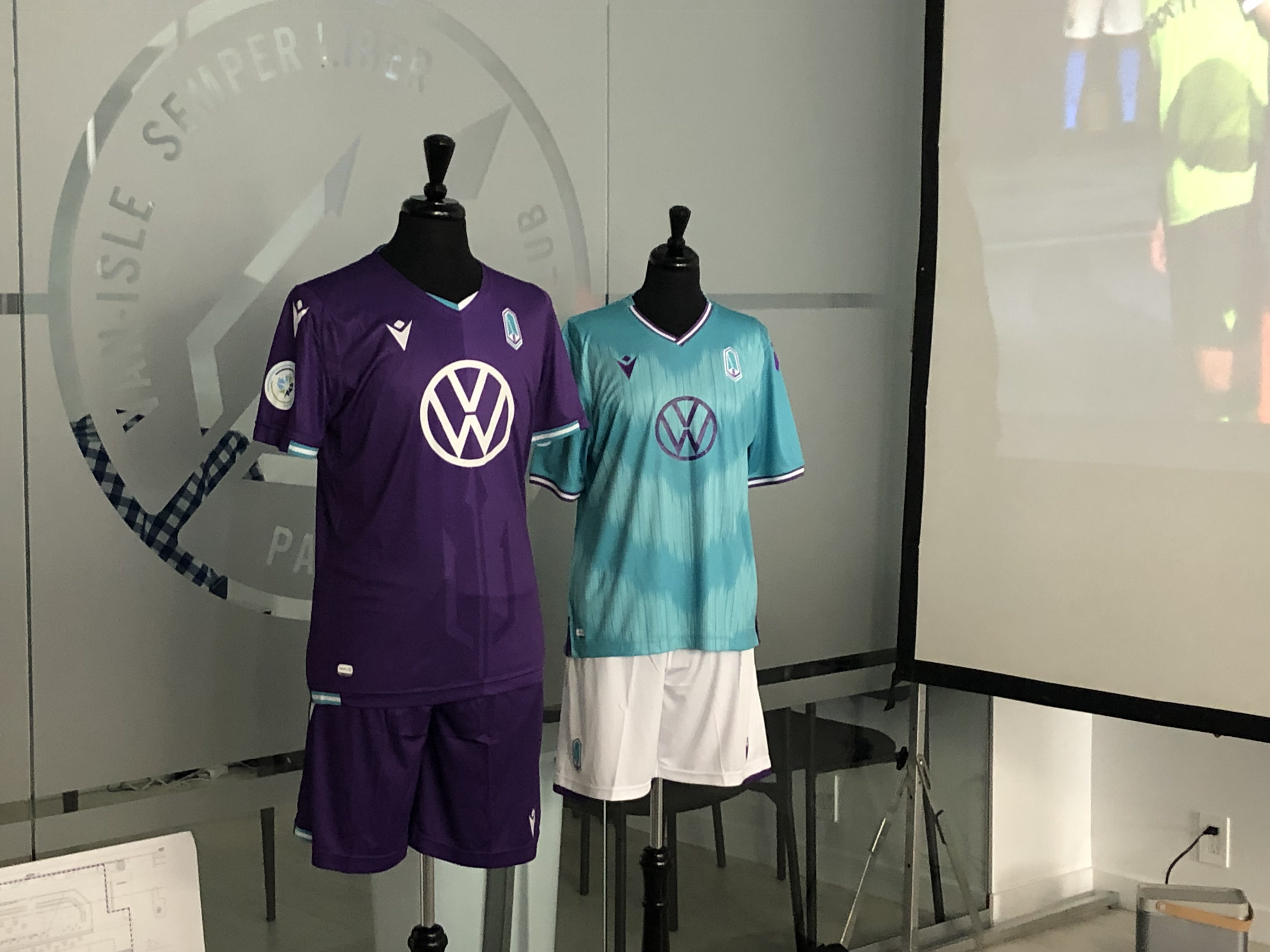

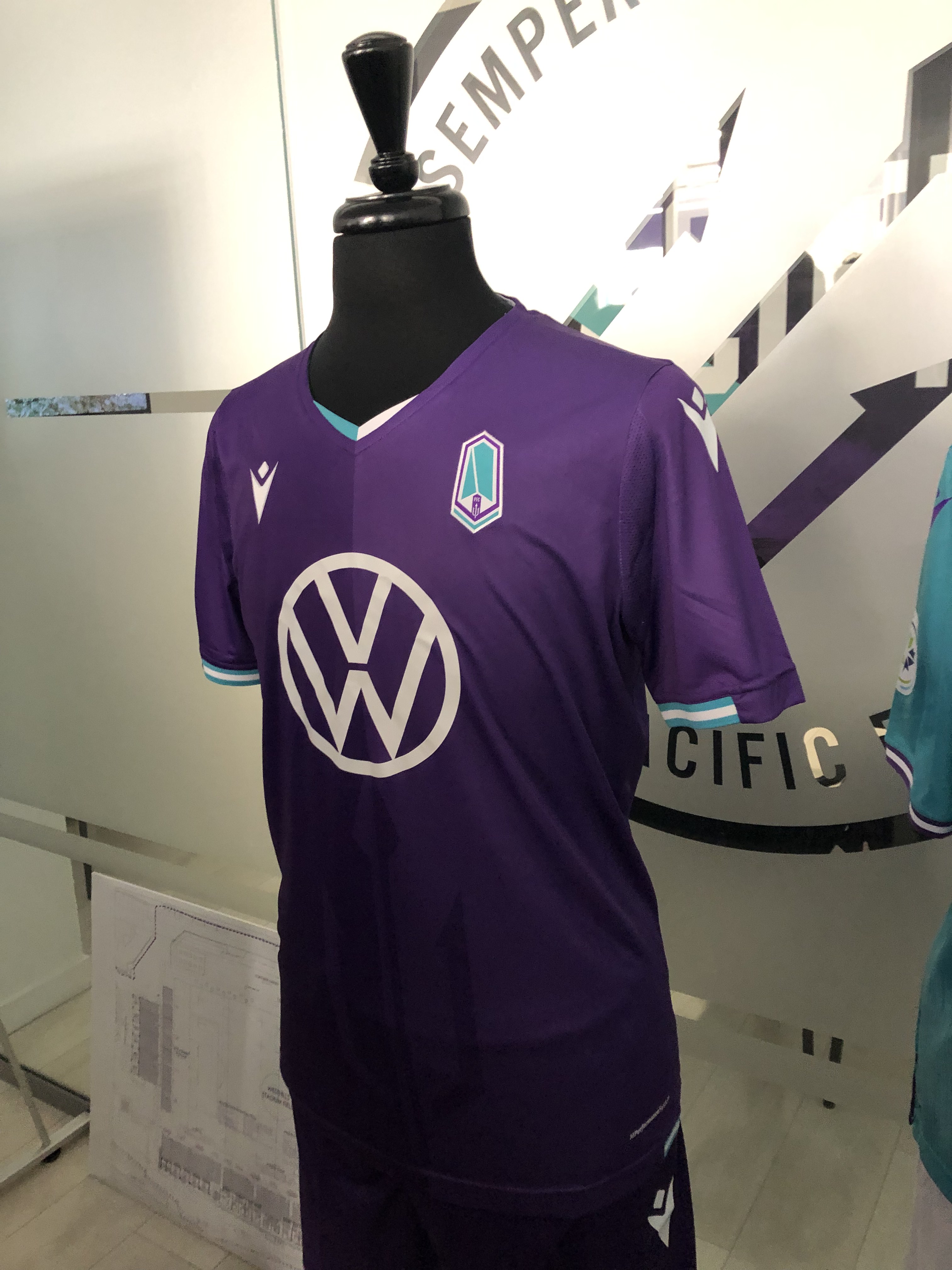
The immediate sartorial reviews were quite positive. The home kit, features a majestic purple colour, and displays a two tone design, divided by a sublimated trident, an already established element of the club’s iconography. The kit also uses a modern, athletic neckline, which displays the clubs other colours, white and teal. Simpson himself said for him while he played, this style of collar provided the most comfort and function. The unique colour scheme of the kit was one of the standout features. Few clubs in the world wear deep purple as a primary kit colour, and for this reason alone, this kit feels like a must have item.
The away kit appears quite bold, showing off a bright teal colour as the base, with a deeper teal in wavy patterns, to represent the club’s link with the Pacific Ocean. In world football, few teams feature such prominent use of teal, and the design hearkens back to German National Team alternate kits at previous World Cups (1994 and 2018 come to mind).
Overall, as a keen observer of football culture and design, for me these initial kits seem to hit the mark, and will be part of my own personal summer wardrobe. The one critique that the shirt seemed to receive, particularly amongst members of the local supporters group, the Lake Side Buoys, was the presence of Volkswagen as the primary club sponsor.
Though VW has a long history of supporting football around the globe, its most recent emissions scandal has rankled residents of Vancouver Island, who have long been champions on raising environmental issues and being amongst the most progressive in this regard in all of Canada. For a club that is trying to ingratiate itself with the entire local community, and truly be #ForTheIsle (as their corporate designed hashtag suggests), this appears to be a misstep. Surely, this will also be a point of derision from opposing fans, and will undoubtedly prompt the club to find another shirt sponsor in year two.
However, for a brand new club in a brand new league, in year one, it just may have to do.
After the event, I had the opportunity to share my thoughts on the kits with fine fellow, Adam, from The (excellent) Young Gaffers podcast. Please have a listen to the episode, and subscribe to their show!
Jaideep Kanungo
 Jaikan Sport